AI search is quickly becoming a major product discovery channel. According to Similarweb, generative AI platforms averaged around 9.5 billion web visits per month between June 2025 and May 2026, up about 70% year over year.
For marketers, this creates a new visibility problem. It is no longer enough to know where your website ranks in Google. Customers increasingly ask ChatGPT, Gemini, Perplexity, Claude, and other AI assistants which products, tools, or services they should choose.

If your competitors are mentioned and your brand is not, you may lose the customer before they ever reach a traditional search engine. This is why AI visibility tools are becoming increasingly important.
These platforms track brand mentions, citations, competitors, prompts, sentiment, and share of voice across AI-generated answers. In this guide, we compare the best AI visibility tools in 2026, including dedicated GEO platforms and AI visibility products from established SEO companies.
- Best AI Visibility Tools: Quick Comparison
- 1. Profound
- Why Profound stands out
- Potential downside
- 2. Peec AI
- Pricing
- Why Peec AI stands out
- Potential downside
- 3. Otterly.AI
- Pricing
- Why Otterly.AI stands out
- Potential downside
- 4. Scrunch AI
- Why Scrunch stands out
- Potential downside
- 5. AthenaHQ
- Who should consider AthenaHQ?
- 6. Semrush AI Visibility Toolkit
- Why Semrush makes sense
- Pricing
- Potential downside
- 7. Ahrefs Brand Radar
- Why Brand Radar stands out
- Potential downside
- 8. Rankscale
- Why Rankscale is interesting
- Who should use Rankscale?
- 9. Goodie
- AI engine coverage
- Pricing
- Why Goodie stands out
- Potential downside
- 10. Xfunnel
- Who should consider Xfunnel?
- Best AI Visibility Tool by Use Case
- Best for enterprise: Profound
- Best for marketing teams: Peec AI
- Best for beginners: Otterly.AI
- Best for technical teams: Scrunch AI
- Best for existing SEO teams: Semrush
- Best for competitive intelligence: Ahrefs Brand Radar
- Best end-to-end AEO platform: Goodie
- How Much Do AI Visibility Tools Cost?
- What Is the Best AI Visibility Tool in 2026?
Best AI Visibility Tools: Quick Comparison
| Tool | Best For | Starting Price* | Key Strength |
|---|---|---|---|
| Profound | Enterprise | From $99/mo | Deep AI visibility analytics |
| Peec AI | Marketing teams | From $95/mo | Competitive AI search tracking |
| Otterly.AI | SMBs & marketers | From $29/mo | Affordable entry point |
| Scrunch AI | Enterprise & technical teams | Contact vendor | Monitoring + technical optimization |
| AthenaHQ | Growth teams | Plans vary | GEO workflows |
| Semrush AI Visibility | SEO teams | From $99/mo | SEO + AI visibility |
| Ahrefs Brand Radar | Competitive research | Paid add-on | Large-scale brand intelligence |
| Rankscale | Smaller teams | Low-cost plans | Affordable GEO tracking |
| Goodie | Brands & agencies | From $399/mo | End-to-end AEO |
| Xfunnel | B2B marketing | Plans vary | AI visibility & attribution |
*Pricing changes frequently. Check the vendor’s website for current pricing before purchasing.
1. Profound
Website: tryprofound.com
Best for: Enterprise AI visibility
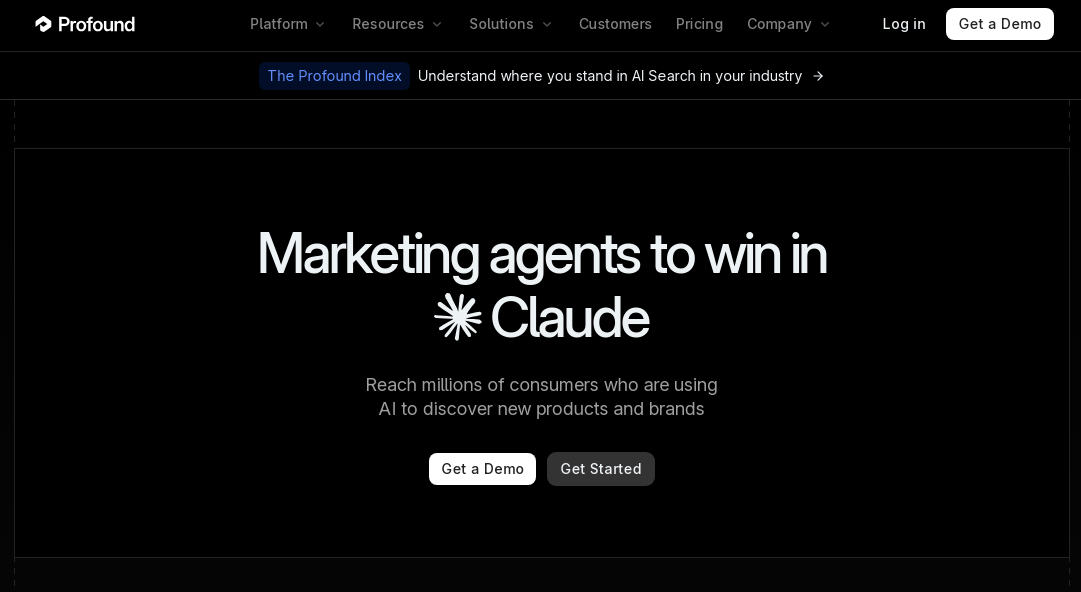
Profound is one of the most recognizable dedicated platforms in the emerging AI visibility and Answer Engine Optimization market.
Instead of treating AI search as another traditional ranking report, Profound focuses on understanding how brands appear inside AI-generated answers.
The platform runs structured prompts across AI platforms and analyzes where brands appear, which sources are cited, how competitors perform, and how visibility changes over time.
Why Profound stands out
Depth is Profound’s biggest advantage. The platform goes beyond basic prompt monitoring into citation analysis, sentiment, competitive presence, and enterprise-level AI search intelligence.
Profound has also expanded into areas such as AI shopping analysis, making it particularly interesting for large companies that see AI discovery as a new customer acquisition channel.
Potential downside
Smaller companies may not need the level of functionality Profound provides. If you only want to monitor a limited number of prompts, a simpler platform may offer better value.
Tech-Coffee verdict: Best for enterprise AI visibility.
2. Peec AI
Website: peec.ai
Best for: Marketing teams
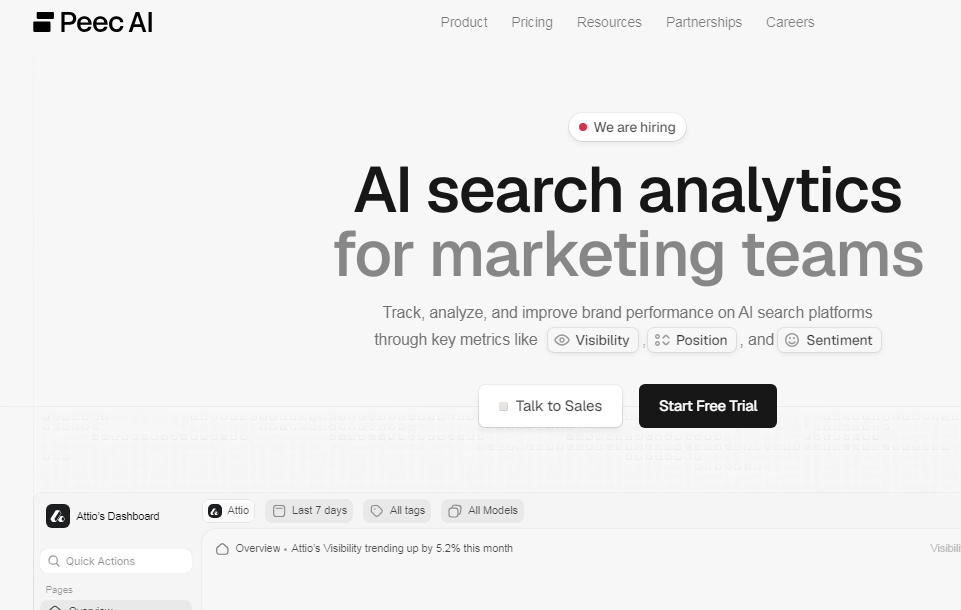
Peec AI is a dedicated AI search analytics platform designed primarily for marketing teams and agencies.
It allows marketers to track how frequently their brands appear across AI-generated answers and compare that visibility with competitors.
Peec focuses heavily on metrics that marketers can actually use: prompts, citations, brand visibility, competitive share of voice, and performance changes over time.
Pricing
Peec’s Starter plan is currently priced at approximately $95 per month and includes 50 prompts. Higher tiers increase prompt capacity, projects, countries, and reporting capabilities.
Why Peec AI stands out
The product is focused specifically on AI search rather than trying to combine hundreds of traditional SEO metrics into the same interface.
This makes it relatively easy for marketing teams to introduce AI visibility as a new KPI.
Potential downside
Peec is not intended to replace a traditional SEO platform. Companies will normally still need separate software for keyword research, backlinks, and technical SEO.
Tech-Coffee verdict: One of the best balanced options for dedicated marketing teams.
3. Otterly.AI
Website: otterly.ai
Best for: Small businesses and marketers getting started with GEO
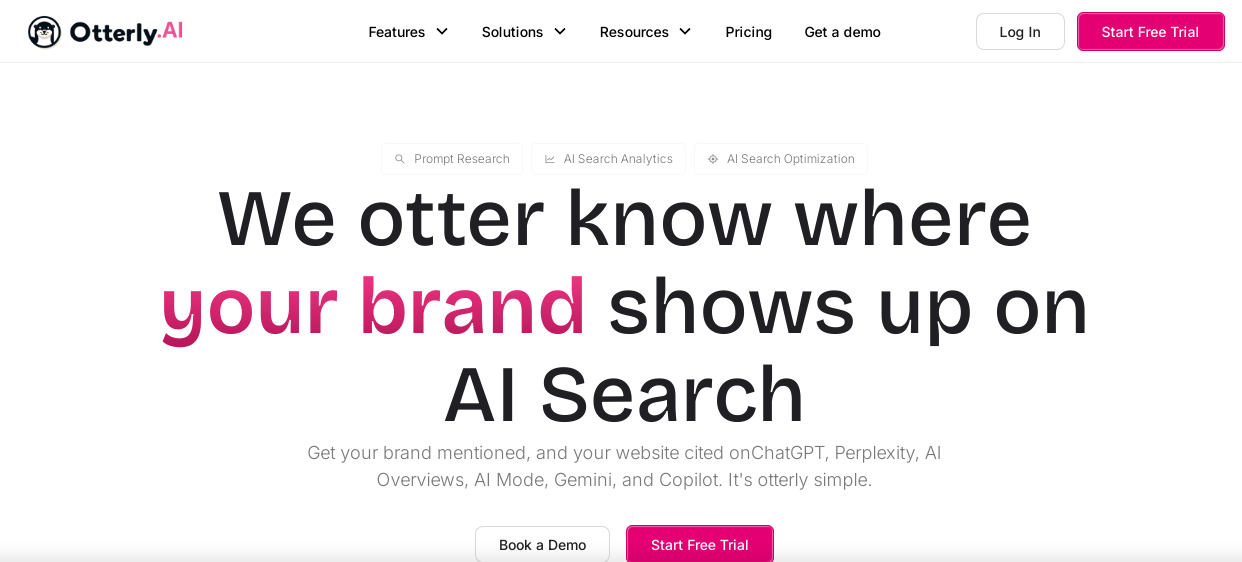
Otterly.AI offers one of the most accessible entry points into AI visibility monitoring.
Its lower starting price makes it particularly interesting for marketers who want to test GEO tracking before committing hundreds of dollars per month.
Pricing
Plans start at approximately $29 per month, with higher tiers increasing the number of monitored prompts and available capabilities.
Otterly tracks major AI search environments and provides features such as daily monitoring, citation analysis, brand visibility reports, and GEO audits.
Why Otterly.AI stands out
The biggest advantage is accessibility. A small SaaS company, consultant, or independent marketer can begin tracking AI visibility without an enterprise-level budget.
Potential downside
Companies should look carefully at which AI engines are included in their chosen plan because additional model coverage can affect the total subscription cost.
Tech-Coffee verdict: Best AI visibility tool for beginners.
4. Scrunch AI
Website: scrunch.com
Best for: Enterprise and technical AI optimization
Many AI visibility platforms answer one question: “Does AI mention our company?”
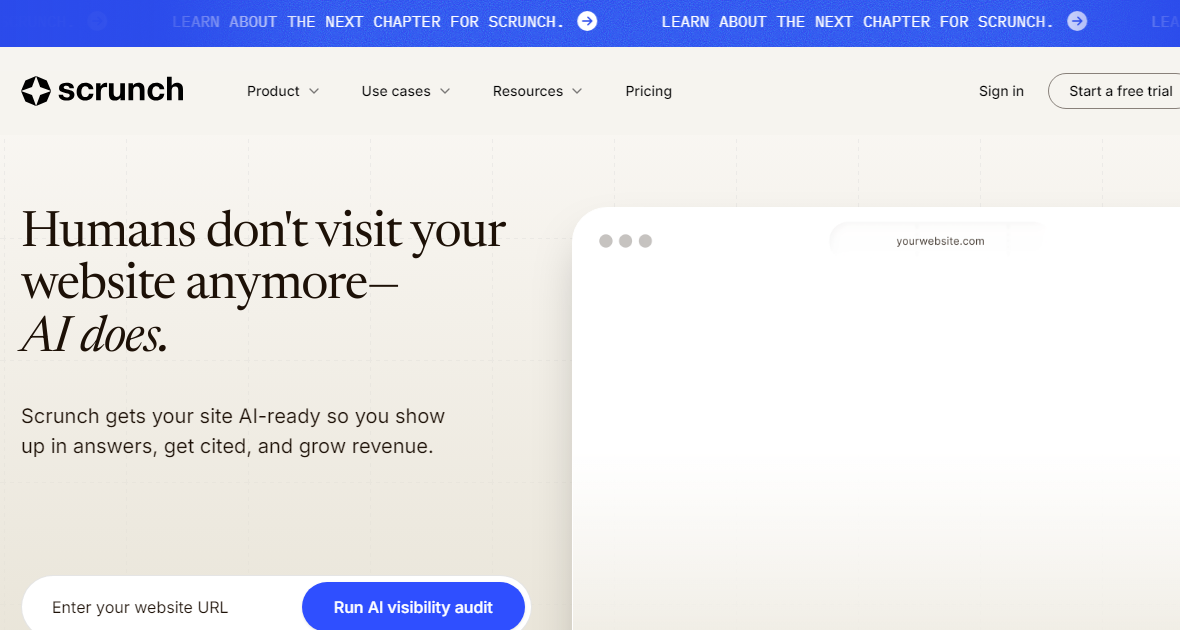
Scrunch goes further by looking at how AI crawlers interact with websites and how AI visibility connects with traffic and conversions.
This makes the platform particularly interesting for organizations that have moved beyond simply measuring mentions and want to understand the technical infrastructure behind AI discovery.
Why Scrunch stands out
Scrunch connects AI answer visibility, crawler behavior, and referral performance. That gives technical marketing teams a broader picture than simple prompt tracking.
Potential downside
Its enterprise orientation can make Scrunch excessive for small companies that only need basic brand monitoring.
Tech-Coffee verdict: Best for technically sophisticated and enterprise teams.
5. AthenaHQ
Website: athenahq.ai
Best for: Growth teams building a GEO program
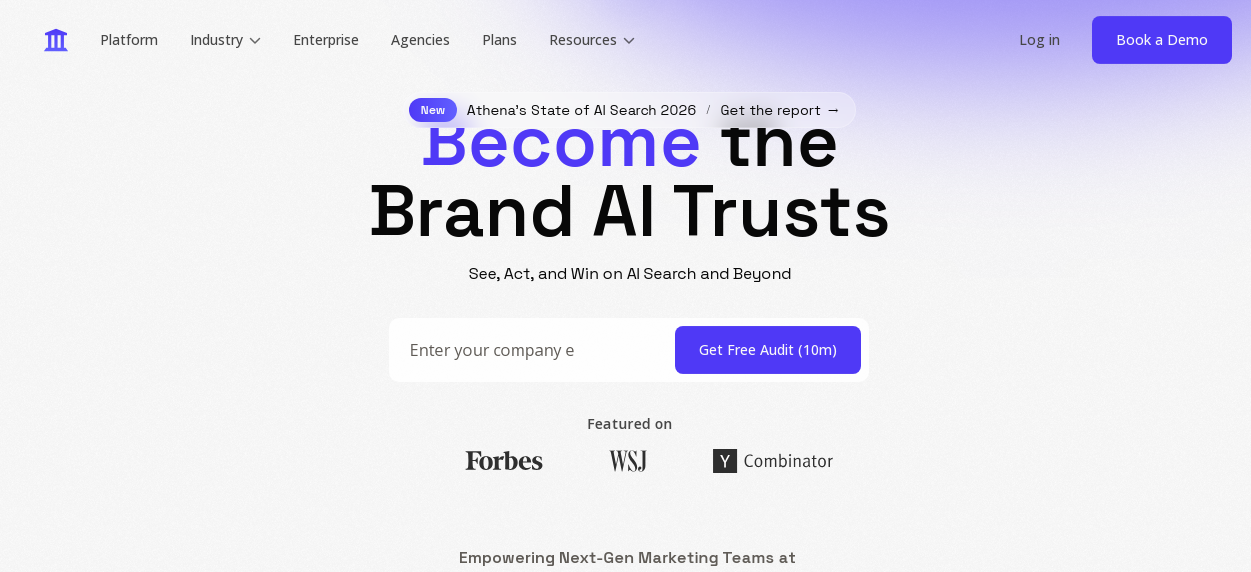
AthenaHQ is built around Generative Engine Optimization and the workflows companies need to understand and improve their presence in AI-generated answers.
Rather than treating GEO as a one-time visibility check, AthenaHQ is relevant to teams trying to establish AI search optimization as a repeatable marketing process.
Who should consider AthenaHQ?
Growth teams, SaaS companies, content marketers, and organizations building a structured GEO strategy should include AthenaHQ in their shortlist.
Tech-Coffee verdict: A strong option for growth-focused GEO teams.
6. Semrush AI Visibility Toolkit
Website: Semrush AI Visibility
Best for: Existing SEO teams
AI visibility is no longer a category occupied only by GEO startups. Established SEO platforms are rapidly adding their own AI search intelligence products.
Semrush is particularly interesting because many marketing departments already use its ecosystem for keyword research, backlinks, competitive intelligence, technical SEO, and rank tracking.
Why Semrush makes sense
For an existing Semrush customer, AI visibility can become another part of the search marketing workflow rather than another completely separate platform.
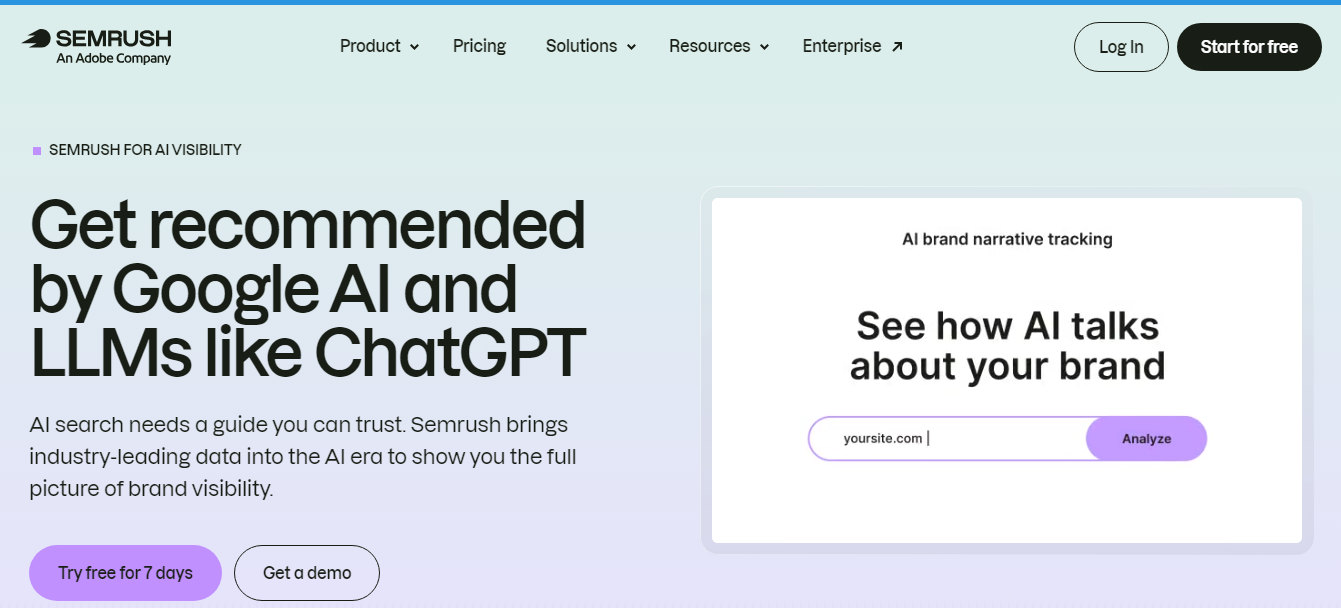
The AI Visibility Toolkit provides AI visibility reports, prompt tracking, competitor analysis, perception insights, and AI-readiness analysis.
Pricing
The AI Visibility Toolkit currently starts around $99 per month per domain. Companies should check limits for users, domains, and tracked prompts before comparing the price directly with dedicated GEO tools.
Potential downside
Specialist GEO platforms may provide deeper functionality for teams focused primarily on AI visibility.
Tech-Coffee verdict: Best choice for companies already using Semrush.
7. Ahrefs Brand Radar
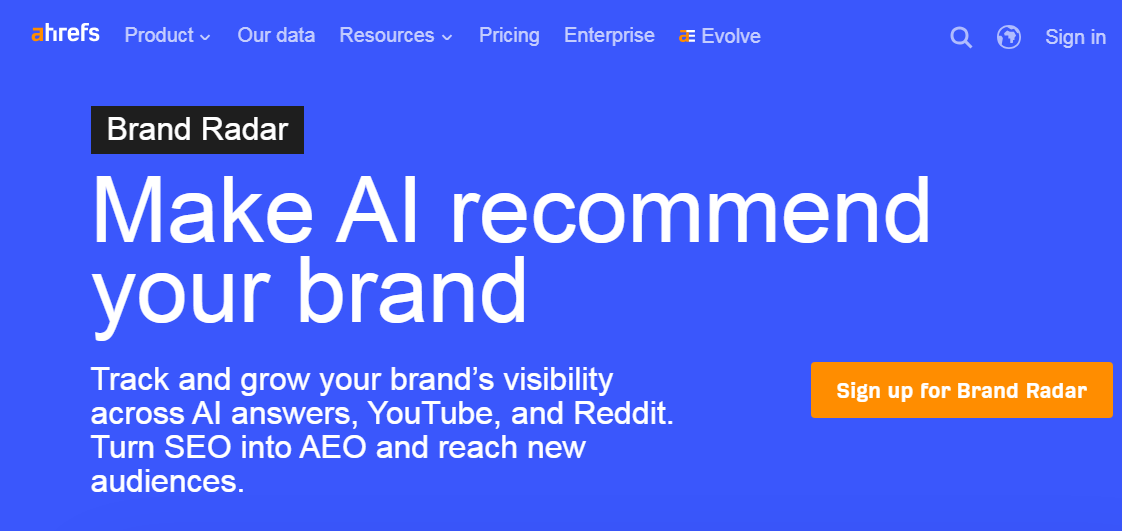
Website: Ahrefs Brand Radar
Best for: Competitive brand intelligence
Ahrefs Brand Radar expands the company’s traditional SEO intelligence into brand and AI search monitoring.
The platform allows marketers to investigate how brands, competitors, and topics appear across AI search and the broader web.
Why Brand Radar stands out
One interesting difference is Ahrefs’ enormous existing search dataset. Rather than viewing AI visibility completely separately from traditional search behavior, marketers can investigate both within the Ahrefs ecosystem.
This can be particularly valuable for competitive research, where an absolute visibility score means little without context.
Potential downside
Brand Radar is better viewed as a research and intelligence product than a complete GEO optimization workflow.
Tech-Coffee verdict: Best for SEO-driven competitive intelligence.
8. Rankscale
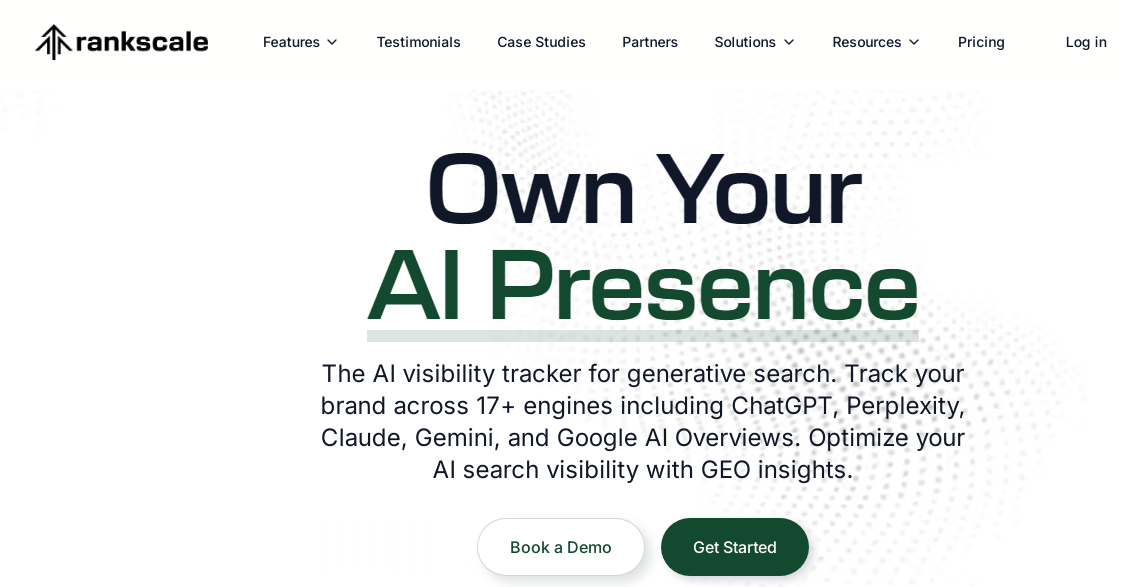
Website: rankscale.ai
Best for: Budget-conscious GEO monitoring
Not every business needs enterprise-level AI analytics.
Rankscale represents a growing category of more accessible GEO tracking platforms designed to measure visibility across AI search engines without requiring a large software budget.
Why Rankscale is interesting
AI monitoring costs can rise quickly because businesses may want to track hundreds of prompts across multiple models and markets.
A lower-cost platform can therefore make more sense during the experimentation stage.
Who should use Rankscale?
Small SaaS companies, consultants, independent SEO professionals, and companies experimenting with GEO are the most obvious audience.
Tech-Coffee verdict: Worth considering for budget-conscious teams.
9. Goodie
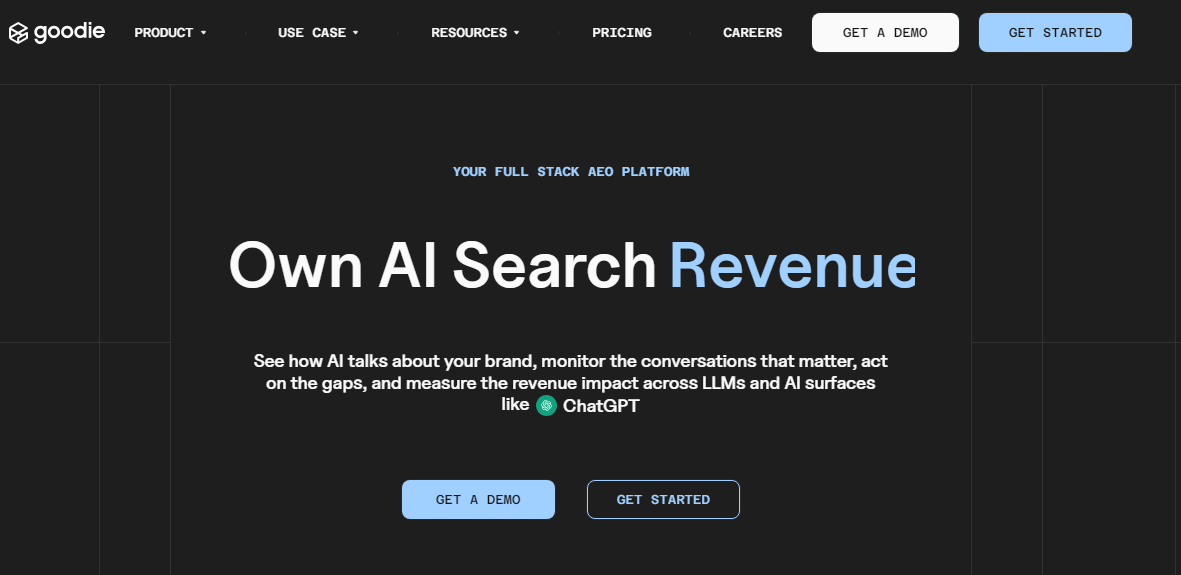
Website: higoodie.com
Best for: Brands and agencies building an end-to-end AEO program
Goodie positions itself as an end-to-end Answer Engine Optimization platform rather than simply an AI rank tracker.
Its platform covers prompt research, visibility monitoring, competitive benchmarking, optimization actions, content, crawler analysis, and attribution.
AI engine coverage
Depending on the plan, Goodie monitors platforms including ChatGPT, Google AI Overviews, Perplexity, Gemini, Copilot, Claude, Google AI Mode, DeepSeek, Grok, Meta AI, and other emerging AI surfaces.
Pricing
The Explorer plan currently starts at $399 per month and includes 100 prompts and 3,000 AI responses per month. More advanced plans expand model coverage, prompt volume, optimization actions, and attribution capabilities.
Why Goodie stands out
The platform attempts to close the gap between measurement and action. Instead of only telling a company that its visibility is weak, Goodie includes workflows designed to identify and execute improvements.
Potential downside
The $399 starting price means Goodie is primarily aimed at organizations already committed to investing in AEO rather than businesses simply testing the concept.
Tech-Coffee verdict: One of the most comprehensive choices for brands and agencies running AEO as a dedicated marketing channel.
10. Xfunnel
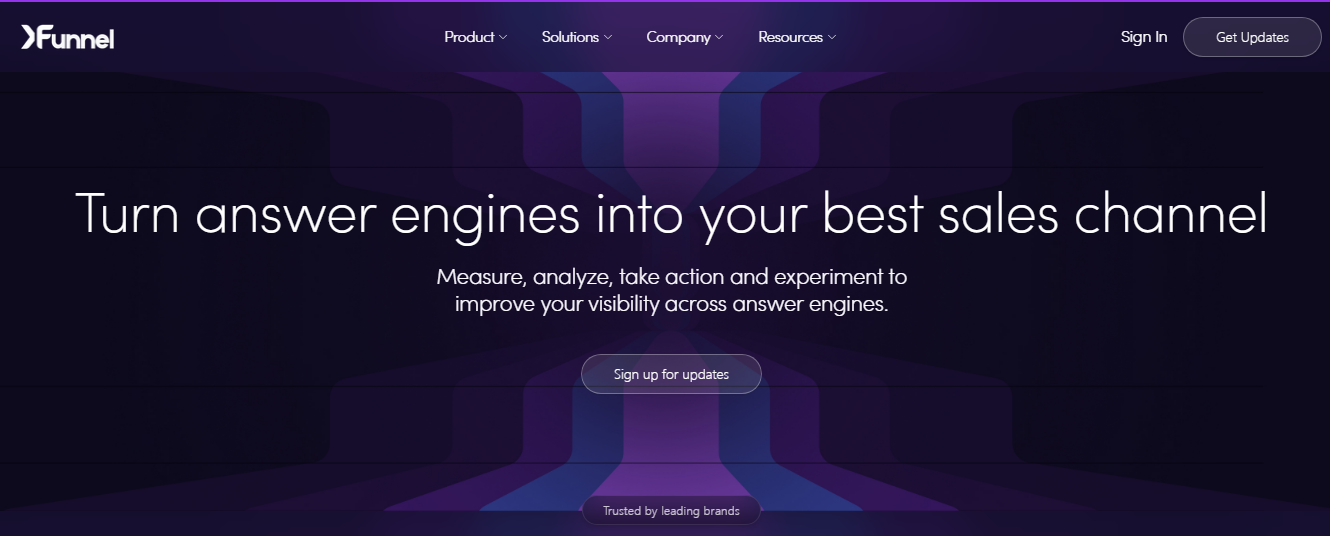
Website: xfunnel.ai
Best for: B2B marketing teams
Xfunnel approaches AI visibility from a B2B marketing perspective.
This is an important distinction because AI visibility ultimately matters when it influences buying decisions, not simply when it produces another marketing score.
For B2B organizations, understanding where a brand appears during AI-assisted product research can increasingly become part of attribution and customer acquisition analysis.
Who should consider Xfunnel?
B2B SaaS companies and revenue-focused marketing teams interested in connecting AI discovery with the broader customer acquisition funnel.
Tech-Coffee verdict: An interesting option for B2B-focused AI visibility analysis.
Best AI Visibility Tool by Use Case
Best for enterprise: Profound
Choose Profound when AI visibility is important enough to require sophisticated competitive intelligence, citation analysis, and enterprise reporting.
Best for marketing teams: Peec AI
Peec AI offers a strong balance between dedicated AI search functionality and usability for marketing teams.
Best for beginners: Otterly.AI
Its low entry price makes Otterly.AI one of the easiest ways to start measuring AI visibility.
Best for technical teams: Scrunch AI
Scrunch is particularly interesting when crawler behavior, technical AI accessibility, attribution, and optimization matter alongside visibility.
Best for existing SEO teams: Semrush
Companies already using Semrush should investigate its AI Visibility Toolkit before adding another standalone subscription.
Best for competitive intelligence: Ahrefs Brand Radar
Ahrefs is particularly useful when AI visibility needs to be analyzed alongside traditional search and competitive data.
Best end-to-end AEO platform: Goodie
Goodie combines monitoring with research, optimization, crawler intelligence, and attribution, making it particularly relevant to companies building a dedicated AEO program.
How Much Do AI Visibility Tools Cost?
AI visibility software currently has an unusually wide pricing range.
Entry-level monitoring can begin at approximately $20–30 per month, while more sophisticated platforms cost hundreds of dollars per month. Enterprise implementations can cost considerably more.
What Is the Best AI Visibility Tool in 2026?
There is no universal winner because the platforms target different customers.
For large organizations, Profound is one of the strongest enterprise options because of the depth of its AI visibility and competitive intelligence capabilities.
For dedicated marketing teams, Peec AI offers an attractive balance between specialization and usability.
For smaller businesses that simply want to begin measuring AI search, Otterly.AI provides a much lower entry point.
Companies already paying for major SEO platforms should investigate Semrush AI Visibility and Ahrefs Brand Radar before purchasing another subscription.
Organizations building a broader AEO program should also consider platforms such as Goodie and Scrunch, which extend beyond basic prompt tracking.
Ultimately, the most important question isn’t which platform tracks the largest number of AI engines.
It is:
Which tool can reliably monitor the AI questions that influence our customers’ buying decisions — at a scale and price we can sustain?
That is what determines whether AI visibility software becomes a useful marketing intelligence system or simply another dashboard.