Instead of browsing dozens of websites every day, it makes sense to build a small collection of trusted resources for different purposes. Some platforms work best as huge reference libraries, while others are useful for spotting trends, discovering unusual concepts, researching furniture or following industry news.

Below is our selection of some of the most useful architecture and interior design websites worth adding to your bookmarks.
- 1. ArchDaily — Huge Architecture Project Database
- 2. Architizer — Discovering Architecture Firms
- 3. Dezeen — Architecture and Design Trends
- 4. designboom — Experimental Design Ideas
- 5. Divisare — Carefully Curated Architecture
- 6. Architonic — Furniture, Materials and Interior Products
- 7. Domus — Design Culture and Editorial Depth
- 8. FRAME — Commercial and Interior Design
- 9. Design Milk — Modern Interiors and Product Design
- 10. Wallpaper* — Design, Architecture and Lifestyle Trends
- 11. Afasia — Conceptual Architecture
- 12. Landezine — Landscape Architecture
- 13. Yatzer — Cross-Disciplinary Inspiration
- 14. Yellowtrace — Australian and International Interior Design
- Which Architecture and Interior Design Websites Should You Follow?
1. ArchDaily — Huge Architecture Project Database
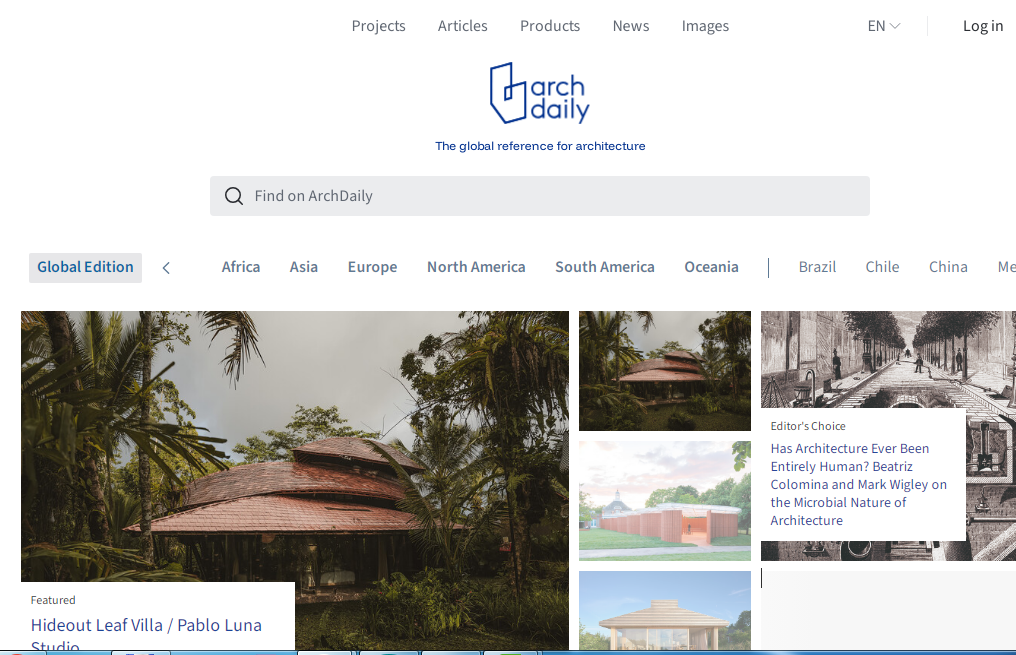
Website: ArchDaily
ArchDaily is one of the world’s best-known architecture websites. It publishes residential, commercial, cultural and public projects created by architects and studios from around the globe. Its huge archive also includes interiors, interviews, competitions, professional articles and industry news.
What makes it useful: the enormous project database. Instead of treating ArchDaily only as a news publication, architects can use it almost as a visual search engine for building types, materials, façades, layouts and architectural solutions.
Best for: architects, architecture students, interior designers, researchers and anyone who regularly needs high-quality architectural references.
Its special feature: scale. When you need to see how different architects have solved a particular design problem, ArchDaily is one of the best places to start.
2. Architizer — Discovering Architecture Firms

Website: Architizer
Architizer combines an architecture publication with a large professional database of projects, architecture firms and building products. Studios can create profiles, showcase their work and participate in the international Architizer A+Awards.
What makes it useful: visitors can discover not only interesting projects but also the firms behind them. It is particularly valuable when researching architecture studios, competitors, potential employers or companies specializing in a specific type of project.
Best for: architects, architecture firms, students, building-product manufacturers and professionals researching the global architecture market.
Its special feature: the connection between projects, architects, brands and products. Architizer functions less like a traditional magazine and more like a professional architecture ecosystem.
3. Dezeen — Architecture and Design Trends
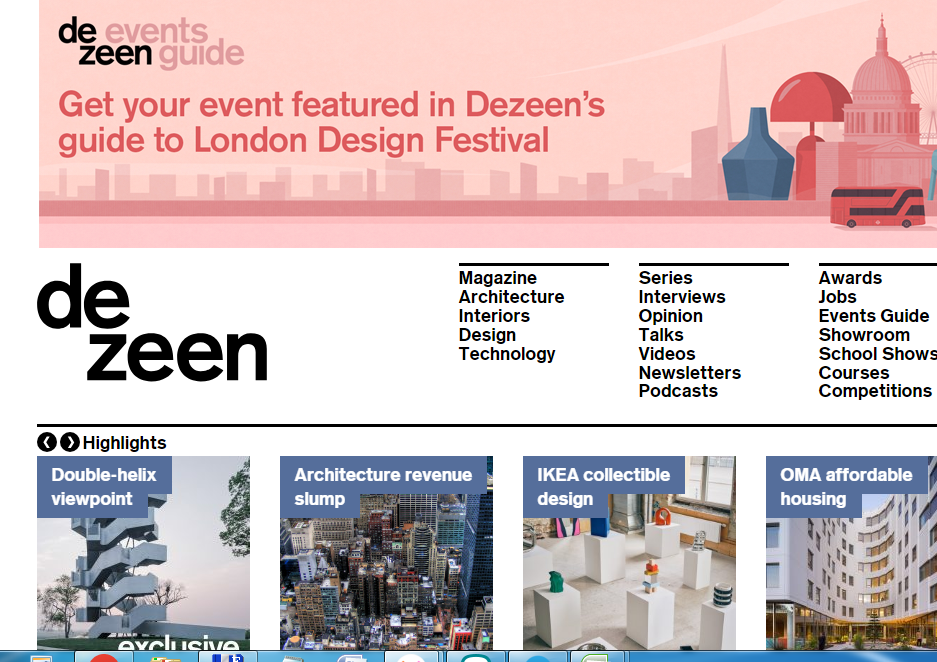
Website: Dezeen
Dezeen is one of the most influential online publications covering architecture, interiors, furniture and product design. Alongside completed projects, the publication covers industry news, interviews, new materials, emerging studios and major international design events.
What makes it useful: Dezeen is especially valuable for understanding what the international architecture and design community is discussing right now.
Best for: architects, interior designers, product designers, creative directors, students and anyone interested in emerging design trends.
Its special feature: speed and editorial selection. Dezeen operates almost like an international newspaper dedicated to contemporary architecture and design.
4. designboom — Experimental Design Ideas
Website: designboom
designboom is one of the long-running international online publications dedicated to architecture, design and creative culture. Its coverage ranges from buildings and interiors to furniture, objects, installations, technology and experimental concepts.
What makes it useful: its unusually broad interpretation of design. One visit can reveal a new architectural project, an experimental chair, an art installation or an unusual technological concept.
Best for: architects, industrial designers, interior designers, product designers and creative professionals looking beyond their immediate field.
Its special feature: experimentation. designboom is particularly good for discovering visual ideas before they become mainstream.
5. Divisare — Carefully Curated Architecture
Website: Divisare
Divisare is closer to a digital atlas of contemporary architecture than a traditional architecture news website. Its focus is on carefully selected projects, architectural photography and thoughtful presentation.
What makes it useful: Divisare encourages slower and more focused research. Projects can be studied as complete architectural works instead of quickly scrolling through another news feed.
Best for: architects, architecture students, photographers and designers looking for refined visual references.
Its special feature: curation. The website feels more like a carefully edited architecture library than a mass-market publication.
6. Architonic — Furniture, Materials and Interior Products
Website: Architonic
Architonic sits at the intersection of architecture, interior design and product specification. It is particularly useful for discovering furniture, lighting, finishes, materials and interior products from manufacturers around the world.
What makes it useful: it connects inspiration with practical product research. Designers can discover a type of furniture or lighting solution and then explore manufacturers producing similar products.
Best for: interior designers, architects, decorators, specifiers and professionals responsible for selecting furniture and materials.
Its special feature: its extensive design-product database makes it highly practical for professionals working on real projects.
7. Domus — Design Culture and Editorial Depth
Website: Domus
Domus is one of the historic names in international architecture and design publishing. The publication covers architecture, interiors, furniture, art and contemporary design culture.
What makes it useful: Domus frequently places architecture within a broader cultural and intellectual context. It is a good choice when you want more than photographs and short project descriptions.
Best for: architects, experienced designers, students, researchers and readers interested in architecture as part of contemporary culture.
Its special feature: editorial depth and heritage. Domus helps readers understand not only what designers create but also the ideas behind contemporary design.
8. FRAME — Commercial and Interior Design
Website: FRAME
FRAME focuses heavily on interior architecture and the way people experience spaces. Its coverage includes retail stores, offices, restaurants, hotels, exhibitions and other forms of commercial and spatial design.
What makes it useful: it provides strong references for designers working with commercial interiors rather than architecture alone.
Best for: interior designers, retail designers, hospitality specialists, architects and companies developing branded physical spaces.
Its special feature: a strong focus on the relationship between space, brand and user experience.
9. Design Milk — Modern Interiors and Product Design
Website: Design Milk
Design Milk covers contemporary design, interiors, architecture, furniture and creative products. Its editorial style makes it easy to discover both complete interior projects and individual objects that can become references for future work.
What makes it useful: the publication is especially effective for discovering furniture, lighting, accessories and smaller design ideas that can be incorporated into interiors.
Best for: interior designers, decorators, product designers and readers interested in contemporary residential design.
Its special feature: a strong balance between inspirational interiors and actual products.
10. Wallpaper* — Design, Architecture and Lifestyle Trends
Website: Wallpaper*
Wallpaper* approaches architecture and interiors through the wider world of contemporary lifestyle. Its coverage also includes art, travel, fashion, technology and luxury products.
What makes it useful: it helps readers understand how architecture and interior design interact with fashion, hospitality, luxury, technology and consumer culture.
Best for: interior designers, architects, creative directors, brand specialists and professionals working in premium markets.
Its special feature: cross-industry trend spotting. Wallpaper* is useful for seeing ideas that are moving between different creative industries.
11. Afasia — Conceptual Architecture
Website: Afasia
Afasia is an architecture publication with a strong interest in conceptual, minimalist and experimental projects. Alongside completed buildings, it frequently features competitions, proposals and unrealized architecture.
What makes it useful: the editorial selection is often less mainstream than major global architecture websites, making Afasia useful when familiar sources begin to look repetitive.
Best for: architects, architecture students, educators and professionals interested in conceptual architecture.
Its special feature: distinctive editorial taste. Its value comes from a selective rather than comprehensive approach.
12. Landezine — Landscape Architecture
Website: Landezine
Landezine specializes in landscape architecture and publishes parks, plazas, waterfronts, public spaces and landscape interventions from around the world.
What makes it useful: instead of treating landscape architecture as a small section of a broader architecture website, Landezine makes it the central subject.
Best for: landscape architects, urban designers, architects, developers and students.
Its special feature: specialization. For serious landscape research, a focused publication is often far more valuable than a general architecture portal.
13. Yatzer — Cross-Disciplinary Inspiration
Website: Yatzer
Yatzer covers architecture and interiors alongside art, fashion, hospitality and cultural experiences. Its editorial approach frequently highlights distinctive projects from different parts of the world.
What makes it useful: Yatzer can help designers move beyond the visual bubble of traditional architecture publications and discover ideas from neighboring creative disciplines.
Best for: interior designers, architects, artists, stylists and other creative professionals.
Its special feature: unexpected connections between architecture, interiors, art, hospitality and fashion.
14. Yellowtrace — Australian and International Interior Design
Website: Yellowtrace
Yellowtrace is an Australian design publication covering architecture, interiors, furniture and creative culture. Alongside international projects, it provides particularly strong access to the Australian architecture and interior design scene.
What makes it useful: readers can discover studios and projects that may receive less attention from major European and American publications.
Best for: interior designers, architects, creative studios and professionals searching for less obvious sources of inspiration.
Its special feature: the combination of strong Australian design coverage with an international perspective.
Which Architecture and Interior Design Websites Should You Follow?
There is no single architecture website that is perfect for every designer. The most effective approach is to combine several resources depending on what you need.
For a huge project reference library, start with ArchDaily. If you want to follow international design news and emerging trends, read Dezeen. Use Divisare when you need carefully curated architectural references, Architonic when researching furniture and materials, and FRAME when looking for commercial interior design ideas.
For less predictable inspiration, add designboom, Afasia and Yatzer to your reading list. Landscape architects will find Landezine particularly valuable, while designers interested in the intersection of architecture, luxury, fashion and lifestyle should follow Wallpaper*.
The goal is not to consume as much design content as possible. A better strategy is to regularly follow a small group of publications with different editorial perspectives. Over time, this builds a stronger visual library, improves professional awareness and makes it easier to recognize important architecture and interior design trends before they become mainstream.